By Dr Shellie M Bowman Sr. Editor, Public Agenda Senior Columnist, The Spotsylvania Gazette
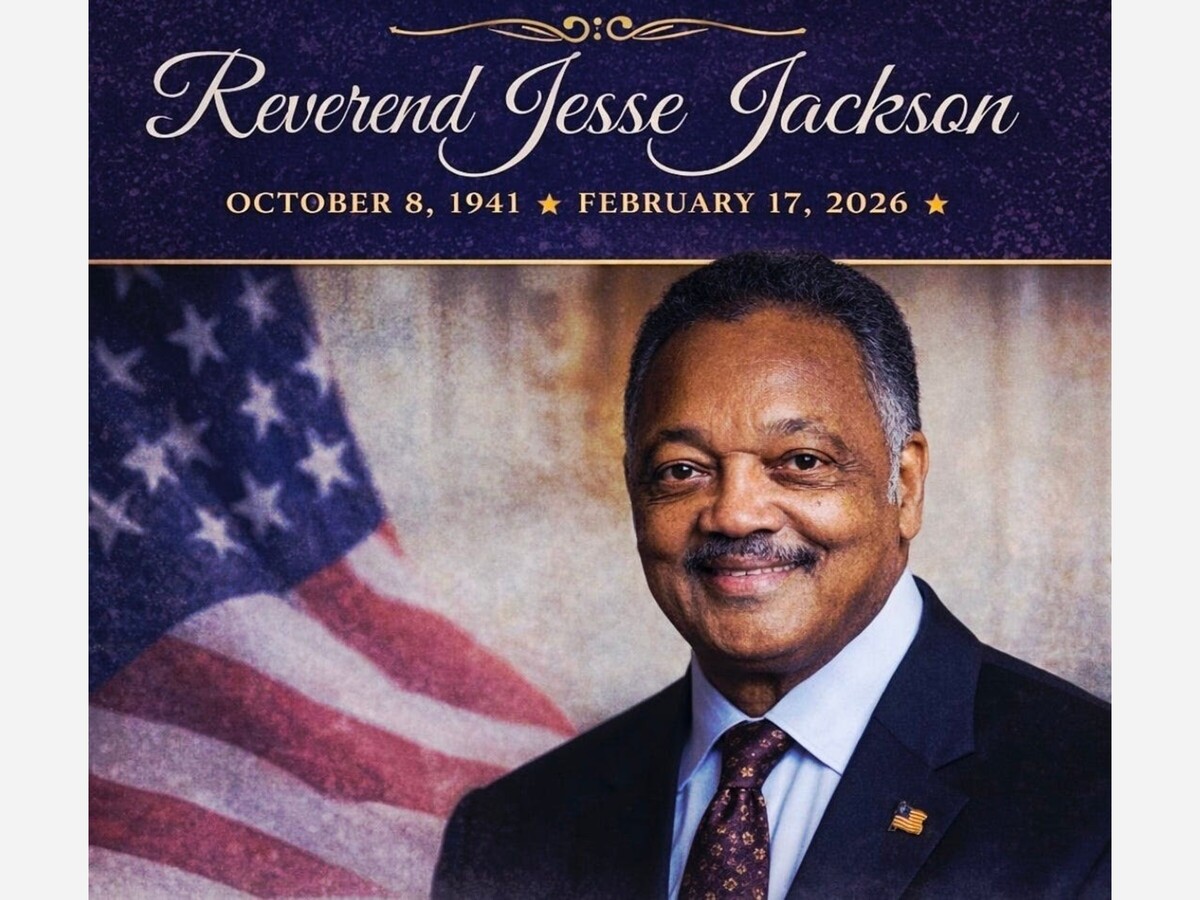
When Rev. Jesse Louis Jackson Sr. declared that his constituency was “the desperate, the damned, the disinherited, the disrespected, and the despised,” he was not speaking in metaphor. He was articulating a theory of democratic legitimacy grounded in inclusion (Jackson, 1984). In that single line, delivered during his 1984 Democratic National Convention address, Jackson identified the moral center of public governance: those whom the system most easily overlooks.
Rev. Jackson, who died in February 2026, stood among the most consequential civil rights leaders of the post King era. He worked alongside Dr. Martin Luther King Jr. within the Southern Christian Leadership Conference and remained at Dr. King’s side during the Memphis sanitation workers’ strike in 1968 (Branch, 1988). Yet Jackson’s historical significance does not rest solely in proximity to Dr. King. His enduring contribution was institutional. Through Operation PUSH, founded in 1971, and later the Rainbow Coalition, Jackson transformed protest energy into durable political infrastructure (Rainbow PUSH Coalition, n.d.).
From a public administration perspective, Jackson’s work should be understood not simply as activism but as governance design. His campaigns in 1984 and 1988 expanded the electorate, mobilized historically marginalized voters, and reframed national politics around coalition building across racial, economic, and geographic lines (Jackson, 1984). The Rainbow Coalition was not rhetorical flourish. It was a systems strategy. Jackson sought to broaden democratic participation by embedding new constituencies into the political process itself.
Voter Inclusion as Administrative Design
Jackson’s work intersected directly with institutional reforms that reshaped voter access. The National Voter Registration Act of 1993, often called the Motor Voter Act, required states to offer voter registration opportunities at motor vehicle agencies and other public service offices (U.S. Department of Justice, 2024). The law operationalized a principle long emphasized by civil rights leaders including Jackson: participation increases when barriers are reduced and registration is integrated into everyday civic transactions.
The NVRA did not emerge in isolation. It reflected decades of advocacy to normalize voter access as an administrative obligation rather than a discretionary privilege. Jackson’s insistence that the “damned” and “disinherited” be included in the electorate resonated in reforms that recognized registration as a systems problem. In public administration terms, this was an intervention into process friction. When the state embeds access into ordinary transactions, it shifts participation from exceptional to routine.
The administrative dimension of voting rights became even more visible in the wake of Shelby County v. Holder, 570 U.S. 529 (2013). In that decision, the United States Supreme Court invalidated the coverage formula under Section 4(b) of the Voting Rights Act, effectively limiting the enforcement mechanism of Section 5 preclearance (Shelby County v. Holder, 2013). The Court did not eliminate Section 5, but by striking the formula that determined which jurisdictions were subject to federal oversight, it altered the enforcement architecture of voting protections.
The public administration implications were immediate. Without preclearance requirements in certain jurisdictions, changes to voting procedures could be implemented without prior federal review. Research and policy analysis following the decision documented shifts in state level voting rules and renewed debates over access and administrative discretion (Brennan Center for Justice, 2023). Whether one approaches the issue from a legal or policy perspective, the underlying governance question mirrors Jackson’s long standing concern: who bears the burden of access, and how do institutional structures either widen or narrow participation?
Contemporary Legislative Efforts and Jackson’s Legacy
The continuing debate over voting rights is evident in congressional consideration of measures such as the John R. Lewis Voting Rights Advancement Act of 2025, which proposes updated coverage formulas and strengthened protections against discriminatory practices (H.R. 14, 2025). The bill reflects ongoing efforts to reconstruct federal oversight mechanisms in response to the Shelby Countydecision.
Jackson’s work offers a reflective benchmark for evaluating such contemporary proposals. His coalition politics did not treat voting as an episodic mobilization strategy. It treated voting as civic infrastructure. That distinction matters. Infrastructure is durable. It requires maintenance, oversight, and adaptive reform. Jackson’s campaigns demonstrated that expanding participation is both a moral and administrative undertaking. Mobilization without institutional embedding leaves gains vulnerable to reversal.
The Rainbow PUSH Coalition’s mission has consistently emphasized economic inclusion, educational equity, and civic participation (Rainbow PUSH Coalition, n.d.). These domains intersect with public administration practice. Economic inequality affects political participation. Administrative burden influences civic trust. Educational access shapes political literacy. Jackson’s coalition model recognized these interdependencies decades before contemporary governance scholarship widely adopted the language of administrative burden and equity analysis.
The Human Dimension of Public Leadership
To honor Jackson properly is also to acknowledge his humanity. He was ambitious, at times controversial, and often operating in politically polarized environments. Yet durability itself is a public value. Jackson remained engaged across shifting political eras, adapting to new institutional landscapes while maintaining his core commitment to inclusion.
In public administration, leadership is frequently evaluated through performance metrics and policy outcomes. Jackson reminds us that leadership also involves symbolic affirmation and narrative framing. By naming his constituency as those most marginalized, he established an ethical benchmark against which governance structures could be measured. That framing continues to challenge public institutions to evaluate whether their procedures, regulations, and enforcement practices reflect genuine accessibility.
Governance and the Measure of Legitimacy
The enduring relevance of Jackson’s work lies in its insistence that democratic legitimacy is tested at the margins. Public institutions may function efficiently while still excluding vulnerable populations. Administrative processes may be technically compliant while substantively inaccessible. Jackson’s life work compels contemporary governance to confront that tension.
The NVRA demonstrated how administrative design can expand participation (U.S. Department of Justice, 2024). The aftermath of Shelby County illustrates how enforcement architecture shapes outcomes (Shelby County v. Holder, 2013). Ongoing legislative efforts reveal that the structure of voter protection remains unsettled (H.R. 14, 2025). Jackson’s vision provides continuity across these developments. His constituency, as he defined it, remains present in contemporary debates over access, oversight, and equity.
Through my lens, the lens of a Doctor of Public Administration, Jackson’s legacy is not merely commemorative. It is evaluative. It provides a standard for assessing whether contemporary governance systems reduce administrative barriers or reproduce them. It challenges policymakers to view voter inclusion not as partisan advantage but as institutional responsibility.
Rev. Jesse Jackson did not claim perfection for himself or for the institutions he challenged. He claimed responsibility. He believed that democracy must be intentionally widened. In that belief lies his enduring public significance.
Dr. Shellie’s Call to Action:
If you are a lawmaker, pause for a moment and set aside party identity. Consider yourself instead as a steward of public trust, vested with the authority to shape lives through legislation. Ask yourself honestly: does my work reduce administrative barriers to participation and opportunity, or does it reproduce them for anyone?
If your answer reveals even unintended harm, are you prepared to correct it? Are you willing to commit, beyond partisanship, to advancing policies that expand access, dignity, and fairness for all people? The measure of public leadership is not partisan victory, but whether governance removes unnecessary burdens and strengthens the democratic promise for everyone.
References Branch, T. (1988). Parting the waters: America in the King years 1954–63. Simon and Schuster. Brennan Center for Justice. (2023). The effects of Shelby County v. Holder on voting rights. https://www.brennancenter.org H.R. 14, 119th Cong. (2025). John R. Lewis Voting Rights Advancement Act of 2025. https://www.congress.gov Jackson, J. (1984, July 18). Address to the Democratic National Convention. WGBH Educational Foundation transcript. Rainbow PUSH Coalition. (n.d.). Organization and mission. https://www.rainbowpush.org Shelby County v. Holder, 570 U.S. 529 (2013). U.S. Department of Justice, Civil Rights Division. (2024). The National Voter Registration Act of 1993 (NVRA). https://www.justice.gov
Public Agenda is free today. But if you enjoyed this post, you can tell Public Agenda that the writing is valuable by pledging a future subscription. You won’t be charged unless payments are enabled.
Spotsylvania Courthouse Weather: Sunday October 11
High: 69°
Low: 62°
Wind: 9 MPH ENE
Chance of rain: 94%
Light rain, with a high of 69 and low of 62 degrees. Moderate rain for the morning, light rain shower in the afternoon, fog in the evening, light rain overnight.
 64° and Light rain