

Image
By Dr Shellie M Bowman Sr
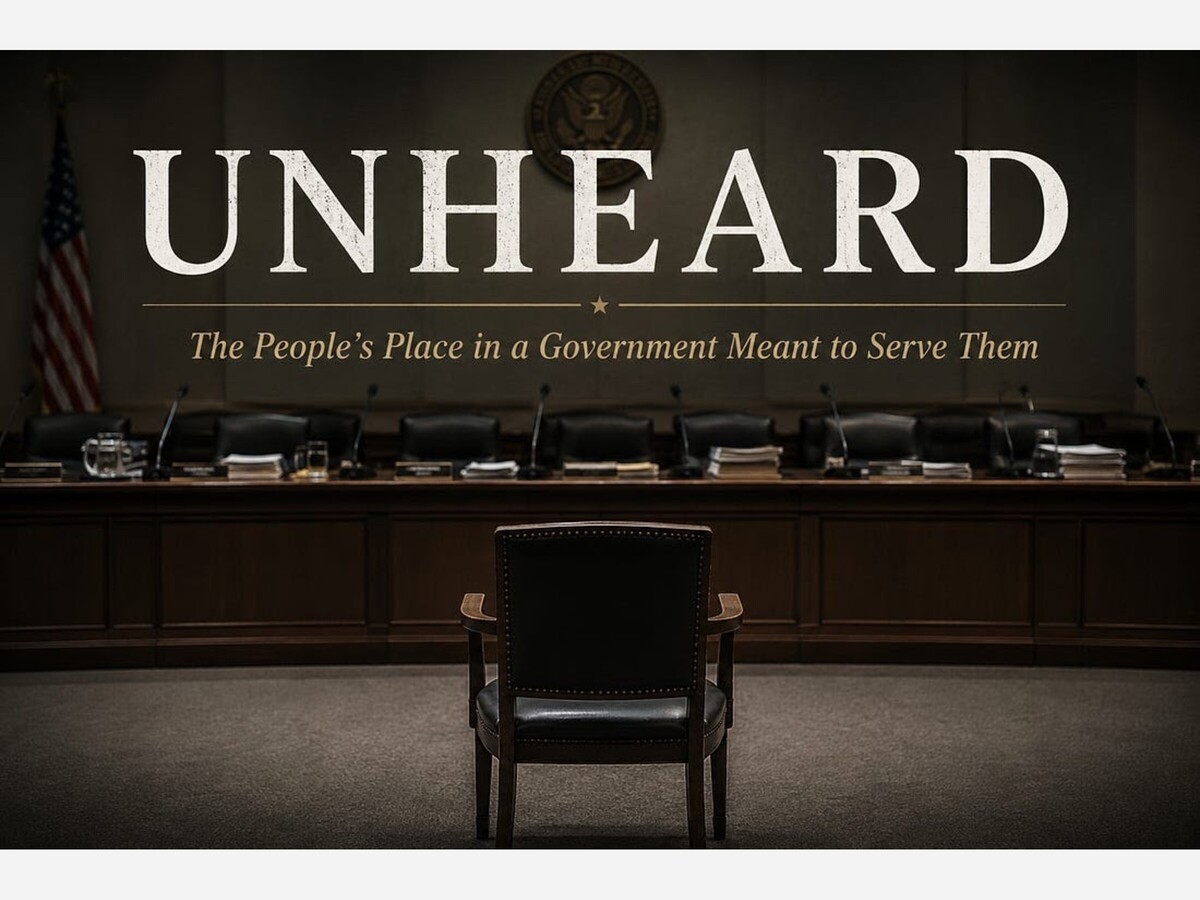
Citizens rarely ask the government to know everything.
They do, however, expect the government to listen.
This expectation is neither partisan nor ideological. It is human. Regardless of political affiliation, socioeconomic status, race, religion, or geography, people want to believe their experiences matter. They want to know that when they encounter government, whether through a public school, a tax office, a public hearing, a permit process, a police officer, or a social service agency, their concerns are not merely recorded but genuinely considered.
Yet many citizens increasingly report feeling disconnected from the institutions designed to serve them. Government agencies collect vast amounts of information. Public officials review reports, surveys, budgets, dashboards, and performance metrics. Despite this abundance of data, many people continue to feel unseen, unheard, and misunderstood.
This presents a challenge that extends beyond politics. It is a true public administration challenge.
A government of the people, by the people, and for the people cannot function effectively if the people believe their voices no longer matter.
The Distance Between Government and the Governed
One of the enduring challenges of public administration is maintaining a meaningful connection between institutions and citizens.
Modern government is significantly more complex than the systems envisioned by the nation’s founders. Public organizations manage transportation systems, public safety agencies, schools, environmental regulations, public health initiatives, tax administration, economic development programs, and countless other responsibilities. To perform these duties effectively, governments rely heavily on data, analytics, performance measurements, and administrative procedures.
These tools are important. Good decisions require evidence.
However, there is a danger when institutions become so focused on measuring outcomes that they lose sight of human experience.
A spreadsheet can identify how many permits were processed.
A budget can show how much money was spent.
A survey can reveal broad trends.
Yet none of these tools can fully explain how citizens experience government.
The difference matters.
Citizens do not experience government through metrics.
They experience government through moments.
The parent attending a school board meeting.
The veteran applying for benefits.
The homeowner reviewing a property assessment.
The business owner navigating regulations.
The resident waiting for a road repair.
These experiences shape perceptions of government far more than organizational charts or performance reports.
What Data Cannot Tell Us
Public administrators are trained to value evidence. They should be.
Data helps identify trends, allocate resources, evaluate programs, and measure outcomes. Evidence-based decision-making remains one of the most important developments in modern public administration.
However, data has limitations.
Data can tell us what happened.
It often cannot tell us how it was experienced.
For example, a county may report that a public hearing was held and that citizens had an opportunity to speak. From an administrative perspective, public participation occurred.
Yet some attendees may leave feeling heard, while others may leave believing their concerns were ignored.
The same event can generate vastly different experiences.
This distinction has been explored through phenomenological research, which focuses on understanding how individuals experience and interpret the world around them. Phenomenology recognizes that lived experience contains important knowledge that cannot always be captured through quantitative measures alone (van Manen, 2016).
From a public administration perspective, this insight is significant.
If the government seeks to serve people effectively, it must understand not only what citizens think, but also how they experience public institutions.
The Public Value of Being Heard
Public administration scholar Mark Moore (1995) argued that government exists to create public value. Public value extends beyond efficiency or compliance. It includes legitimacy, trust, responsiveness, and the public’s confidence that institutions are serving the common good.
Listening plays an important role in this process.
When citizens feel heard, they are more likely to view institutions as legitimate, even when they disagree with specific decisions.
Conversely, when citizens believe their perspectives are ignored, distrust often follows.
This does not mean the government must grant every request or adopt every recommendation. Public leaders routinely face competing interests, legal constraints, budget limitations, and policy tradeoffs.
Listening does not guarantee agreement.
Listening demonstrates respect.
Citizens are often willing to accept outcomes they dislike if they believe the process was fair and their voices were genuinely considered.
The opposite is also true.
Even beneficial outcomes can generate resentment if people feel excluded from the process.
The Administrative Cost of Feeling Unheard
The consequences of citizens feeling unheard extend beyond individual frustration.
Over time, these experiences can weaken trust in institutions, reduce civic participation, and increase skepticism toward public decisions.
Research consistently demonstrates that trust serves as a foundational component of effective governance. Citizens who trust public institutions are generally more willing to comply with regulations, support public initiatives, and engage in civic life (Organisation for Economic Co-operation and Development [OECD], 2024).
Trust, however, is difficult to build and easy to lose.
Many governments attempt to address declining trust through communication campaigns, public relations efforts, or increased transparency. These initiatives can be helpful, but they often treat trust as a messaging problem.
Frequently, trust is a relationship problem.
People do not merely want information.
They want acknowledgment.
They want responsiveness.
They want evidence that their experiences matter.
In many cases, the issue is not that the government failed to communicate. The issue is that the government failed to listen.
Listening as a Leadership Competency
Listening is sometimes dismissed as a soft skill.
In reality, it is a leadership competency.
Effective listening allows public leaders to identify emerging concerns before they become crises. It helps uncover unintended consequences, operational challenges, and community needs that may not appear in formal reports.
Furthermore, listening improves decision-making.
No dataset captures every variable.
No report contains every perspective.
No performance metric fully explains human experience.
Leaders who listen gain access to information that would otherwise remain hidden.
This is particularly important in local government, where public officials are often closest to the communities they serve.
The most effective leaders are not necessarily those who speak the most.
Often, they are the ones who listen the best.
Beyond Public Meetings
When many people think about citizen engagement, they think about public hearings, town halls, or formal meetings.
These forums remain important.
However, meaningful listening often occurs outside official settings.
It happens in conversations.
It happens in neighborhoods.
It happens in community centers, libraries, churches, schools, coffee shops, and local businesses.
People frequently share their most honest perspectives in environments where they feel comfortable and respected.
This reality suggests that effective public engagement requires more than creating opportunities for citizens to speak.
It requires creating opportunities for public servants to listen.
The distinction is subtle but important.
One focuses on participation.
The other focuses on understanding.
A Government Meant to Serve the People
The phrase “government of the people, by the people, for the people” remains one of the most recognizable descriptions of public service.
Yet those words imply a relationship.
Government exists because people collectively authorize it to act on their behalf.
That relationship depends upon more than laws, budgets, elections, and procedures.
It depends upon trust.
It depends upon legitimacy.
And it depends upon citizens believing that their experiences matter.
When people feel unheard, the distance between government and the governed grows.
When people feel heard, even imperfect institutions become more accessible, more responsive, and more legitimate.
Listening alone will not solve every public problem.
It will not eliminate disagreement.
It will not resolve every policy conflict.
However, listening remains one of the most powerful tools available to public leaders because it reinforces a simple but essential principle:
People deserve to be heard by the institutions that exist to serve them.
Conclusion
In an era defined by data, analytics, dashboards, and performance measures, it is tempting to believe that more information will automatically lead to better government.
Information is important.
Yet information alone is insufficient.
Government serves people, not datasets.
Consequently, understanding human experience remains as important as measuring outcomes.
Public institutions must continue collecting data, evaluating performance, and pursuing evidence-based solutions. At the same time, they must remain attentive to the voices, concerns, and lived experiences of the people they serve.
The challenge facing government today is not simply gathering information.
It ensures that citizens do not feel unheard.
A government meant to serve the people must never lose its capacity to listen.
Author’s Note: Public Agenda Conversations
Many of the ideas explored in Public Agenda are informed by research, public administration theory, and current events. However, some of the most meaningful insights come from lived experience.
I am seeking 8 to 12 readers interested in participating in individual 12 to 15-minute virtual conversations about leadership, public trust, government, community life, and the issues explored through Public Agenda.
These conversations are not debates, campaign events, or political discussions. They are opportunities to listen, learn, and better understand how people experience the institutions that shape their daily lives.
If this essay resonates with you and you would like to share your perspective, I invite you to reach out.
Some of the most important lessons about governance are found not in policy manuals, but in the experiences of the people government exists to serve.
References
Moore, M. H. (1995). Creating public value: Strategic management in government. Harvard University Press.
Organisation for Economic Co-operation and Development. (2024). Building trust to reinforce democracy: Main findings from the 2023 OECD survey on drivers of trust in public institutions. OECD Publishing.
van Manen, M. (2016). Researching lived experience: Human science for an action sensitive pedagogy (2nd ed.). Routledge.
Public Agenda is free today. But if you enjoyed this post, you can tell Public Agenda that the writing is valuable by pledging a future subscription. You won’t be charged unless payments are enabled.
Follow us on TikTok @DrShelliePublicAgenda
📢 Stay Connected with Public Agenda by Dr. Shellie M. Bowman
Let’s rebuild public leadership together; one insight, one question, one breakthrough at a time.
eLEADt On with Purpose.


Sunny, with a high of 71 and low of 50 degrees. Sunny during the morning, clear in the afternoon and evening,