85° and Partly Cloudy
Image
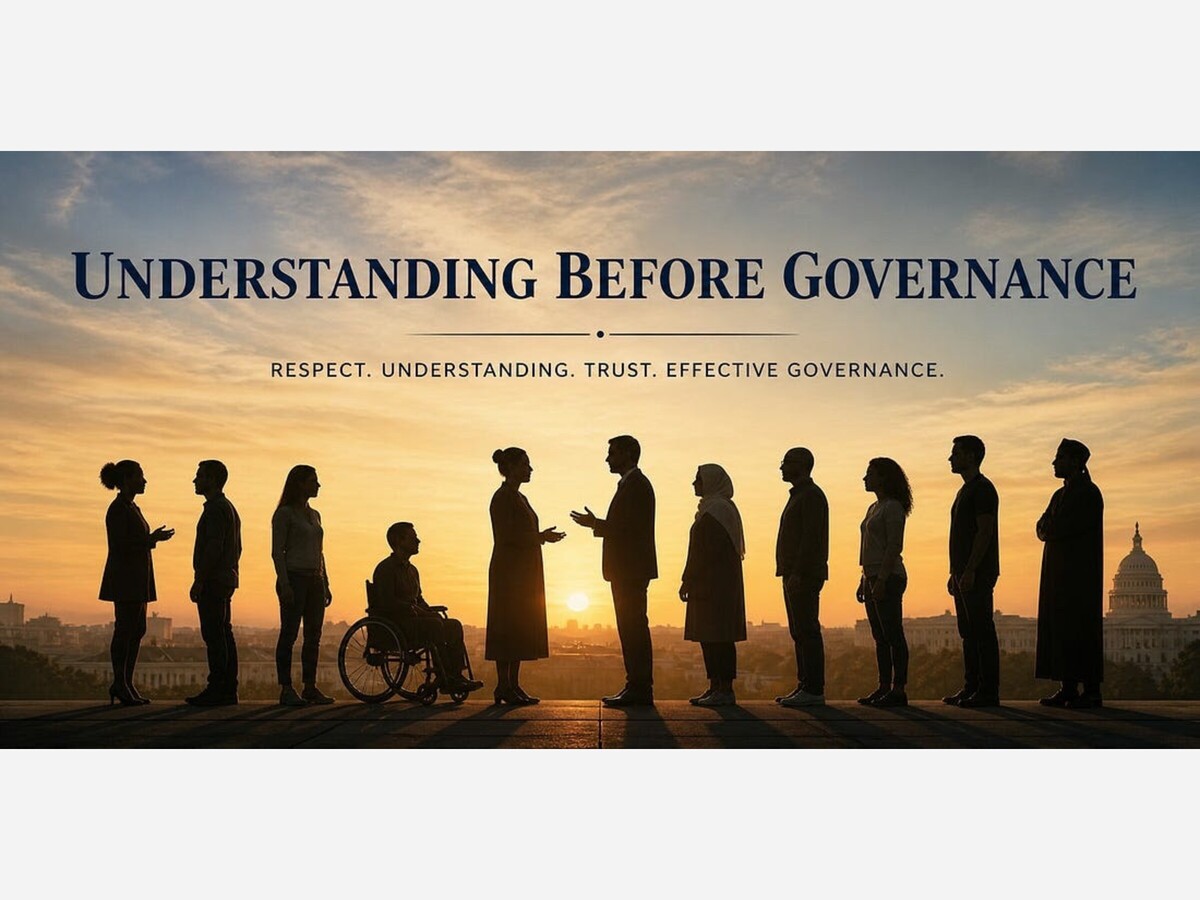



Introduction
The United States is characterized by a significant degree of cultural diversity, which extends beyond demographics to influence the reception of policies, levels of institutional trust, and the experiences of communities with public services. For governmental leadership, an informed perspective on cultural diversity is not merely advantageous but fundamental to effective governance.
Research in public administration demonstrates that leaders who engage with cultural distinctions sincerely and respectfully contribute to institutional legitimacy and achieve more favorable policy outcomes. Conversely, neglecting, oversimplifying, or commodifying culture can diminish trust and lead to negative consequences.
Cultural Understanding and Public Trust
Trust is a foundational element of governance. Without it, even well-designed policies can fail in implementation. Research demonstrates that culturally responsive governance enhances trust by signaling recognition and respect for the lived experiences of diverse communities (Denhardt & Denhardt, 2015).
Leaders who understand cultural norms, values, and communication patterns are better equipped to engage constituents in meaningful ways. This understanding allows public officials to move beyond transactional interactions and toward relational governance, where citizens feel seen and heard.
In contrast, superficial engagement with culture, often characterized by symbolic acknowledgment without substantive inclusion, can produce skepticism. Communities may interpret such actions as performative rather than genuine, which undermines credibility.
From Awareness to Competence in Public Administration
Cultural awareness alone is insufficient. Effective governance requires cultural competence, defined as the ability to apply knowledge of cultural differences in policy design, service delivery, and institutional practice (Rice, 2007).
This competence manifests in several ways:
Scholarly work in public administration emphasizes that culturally competent organizations are more adaptive and better positioned to serve complex populations (Selden & Selden, 2001).
The Risks of Cultural Commodification
While cultural diversity offers a pathway to more inclusive governance, it also presents risks when approached without integrity. One such risk is the commodification of culture, where cultural expressions are extracted, repackaged, and used for political or economic gain without meaningful engagement with the communities from which they originate.
This phenomenon is often associated with cultural appropriation, where elements of a culture are adopted in ways that strip them of context and significance. Research in cultural studies highlights that such practices can lead to feelings of exploitation and marginalization among affected groups (Ziff & Rao, 1997).
For public leaders, this is more than a cultural concern. It is a governance issue. When communities perceive that their identities are being used rather than respected, it weakens the relationship between citizens and institutions.
Cultural Understanding as a Pathway to Effective Governance
Authentic cultural understanding provides a pathway to more effective governance in several key ways.
First, it improves policy relevance. Policies informed by cultural context are more likely to address real needs and avoid unintended consequences.
Second, it enhances public engagement. When communities feel respected, they are more likely to participate in civic processes and collaborate with government institutions.
Third, it strengthens institutional legitimacy. Leaders who demonstrate cultural awareness and respect reinforce the perception that government operates in the interest of all citizens.
Public administration theory supports this approach through the concept of the New Public Service, which emphasizes serving citizens rather than managing them, and valuing democratic engagement over efficiency alone (Denhardt & Denhardt, 2015).
A Call for Intentional Leadership
For government leaders, the challenge is not simply to acknowledge diversity but to engage it with intention and discipline. This requires:
Leaders must recognize that culture is not a tool to be used but a reality to be respected.
Conclusion
Cultural diversity in the United States is a source of strength, but only when it is understood and engaged with integrity. For government leaders, this understanding is not merely a matter of awareness. It is a professional responsibility that directly impacts the effectiveness of governance.
When leaders approach cultural diversity with authenticity, they build trust, enhance policy outcomes, and strengthen the relationship between government and the public. When they fail to do so, they risk alienating the very communities they are called to serve.
Effective governance in a diverse society requires more than representation. It requires understanding, respect, and a commitment to serving all people with dignity.
References
Denhardt, J. V., & Denhardt, R. B. (2015). The new public service: Serving, not steering (4th ed.). Routledge.
Rice, M. F. (2007). Promoting cultural competency in public administration and public service delivery: Utilizing self-assessment tools and performance measures. Journal of Public Affairs Education, 13(1), 41–57.
Selden, S. C., & Selden, F. (2001). Rethinking diversity in public organizations for the 21st century. Administration & Society, 33(3), 303–329.
Ziff, B., & Rao, P. V. (Eds.). (1997). Borrowed power: Essays on cultural appropriation. Rutgers University Press.
Public Agenda is free today. But if you enjoyed this post, you can tell Public Agenda that the writing is valuable by pledging a future subscription. You won’t be charged unless payments are enabled.
Follow us on TikTok @DrShelliePublicAgenda
📢 Stay Connected with Public Agenda by Dr. Shellie M. Bowman
Let’s rebuild public leadership together; one insight, one question, one breakthrough at a time.
eLEADt On with Purpose.



Sunny, with a high of 87 and low of 67 degrees. Sunny in the morning, overcast during the afternoon, patchy rain nearby during the evening, clear overnight.