59° and Mist



Image
By Dr Shellie M Bowman Sr
May 21 2026
Now more than ever, we need to pause, examine ourselves, and set aside superficial differences we often do not truly understand. We must ask a harder question: What does it mean to be an American?
The answer is larger than party affiliation, geography, race, creed, culture, or ideology.
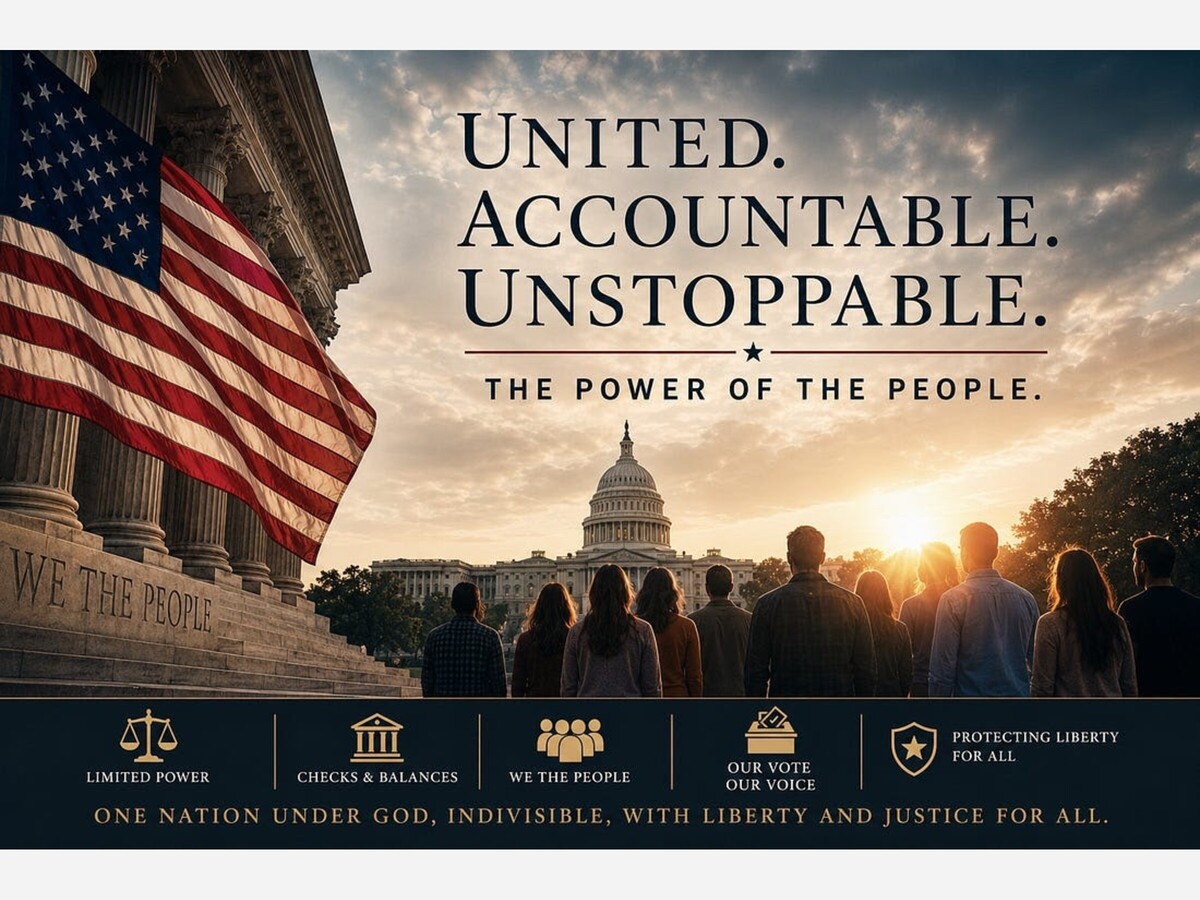
Our strength is embedded in our name: United States.
To be American is not to agree on everything. It is to believe that free people, governed by law and bound by shared responsibility, can disagree without destroying one another. It is to believe that government belongs to the people, not the other way around.
The Framers understood the dangers of unchecked power. Having lived under concentrated authority, they intentionally designed a system of separated powers, checks and balances, and distributed authority to guard against tyranny from foreign threats, domestic abuses, and governmental overreach (Madison, 1788/2003).
They did not assume government would always behave virtuously. They assumed human beings were imperfect.
That assumption remains relevant today.
One of the most misunderstood truths in American life is this: government works for us.
Citizens are not subjects. We are stakeholders, voters, taxpayers, workers, parents, veterans, students, entrepreneurs, and neighbors. Public officials are entrusted with temporary authority, but ultimate sovereignty rests with the people.
This principle is foundational to American constitutionalism.
Yet many Americans increasingly feel disconnected from governance. They witness waste, misallocation of resources, self-serving leadership, institutional distrust, and political dysfunction. These failures do not strengthen the republic. They weaken public confidence and increase vulnerability to governmental failure from national institutions down to local communities.
Bad government is not a partisan problem. Bad government is bad for all Americans.
Public administration scholars have long argued that legitimate government depends upon accountability, responsiveness, and public trust (Denhardt & Denhardt, 2000). When governance drifts away from service to the people, democratic health suffers.
When Americans hear the word tyranny, many imagine kings, dictators, or dramatic historical scenes.
But contemporary tyranny can emerge in quieter ways.
It can appear when accountability weakens. When citizens disengage. When transparency declines. When power becomes insufficiently challenged. When institutions prioritize self-preservation over public service. When people become convinced their participation no longer matters.
The Framers warned against concentrated power because they understood human nature. In Federalist No. 51, Madison argued that institutional controls were necessary because power requires restraint (Madison, 1788/2003).
Checks and balances were not bureaucratic decoration. They were protective devices.
American democracy relies on multiple safeguards:
When citizens withdraw from these responsibilities, democratic protections weaken.
Americans often live under three layers of law.
There is divine law, reflecting moral convictions and higher ethical principles. There is man law, expressed through constitutions, statutes, ordinances, and institutions. And there is the law of nature, the observable reality that actions produce consequences.
Regardless of one’s faith tradition or philosophical outlook, these frameworks point toward a common truth: human beings owe responsibilities to one another.
Governmental systems do not function sustainably without ethics, accountability, and shared civic duty.
Freedom without responsibility becomes instability. Power without accountability becomes danger.
Unity does not require sameness.
America has always been diverse in background, belief, profession, experience, and perspective. Representative democracy depends upon broad participation precisely because communities are complex.
But voting is quantitative.
Legislation is quantitative.
Democratic outcomes are quantitative.
Unity matters because numbers matter.
When citizens organize around shared principles such as accountability, fairness, responsible stewardship, constitutional integrity, and human dignity, democratic change becomes possible.
When division overwhelms common purpose, fragmented voices often struggle to generate meaningful reform.
The opportunity before us is not blind agreement. It is collective civic responsibility.
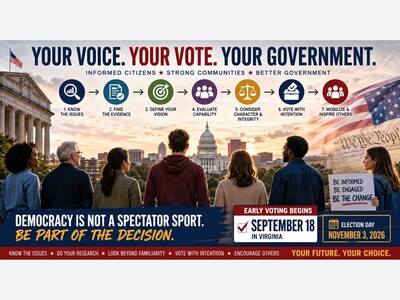
Despite polarization, frustration, and institutional distrust, Americans still possess a powerful democratic instrument: the vote.
Voting remains one of the clearest ways citizens convert values into measurable influence.
Young voters matter.
First-time voters matter.
Disillusioned voters matter.
Every generation inherits a choice between participation and surrender.
The path forward is not violence, despair, apathy, or permanent division.
The path forward is civic courage.
We still have the opportunity to vote our way toward stronger accountability, healthier institutions, and more responsive governance, if we recognize the unity embedded within shared democratic opportunity.
Democracy does not require unanimous thinking.
It requires engaged citizens who understand that government remains accountable to the people.
The American experiment has always depended upon imperfect people choosing responsibility over resignation.
Our strength still lies in the name.
United.
Denhardt, J. V., & Denhardt, R. B. (2000). The new public service: Serving rather than steering. Public Administration Review, 60(6), 549–559.
Madison, J. (2003). The Federalist No. 51. In C. Rossiter (Ed.), The Federalist Papers. Signet Classics. (Original work published 1788)
Public Agenda is free today. But if you enjoyed this post, you can tell Public Agenda that the writing is valuable by pledging a future subscription. You won’t be charged unless payments are enabled.
Follow us on TikTok @DrShelliePublicAgenda
📢 Stay Connected with Public Agenda by Dr. Shellie M. Bowman
Let’s rebuild public leadership together; one insight, one question, one breakthrough at a time.
eLEADt On with Purpose.



Mist, with a high of 65 and low of 58 degrees. Fog in the morning, mist for the afternoon, fog overnight.