47° and Light drizzle
Jeremiah Community Needs a Promise That Lasts Beyond Move-In Day


By Douglas Vandergraph
https://douglasvandergraph.com/
Fifty small homes could change the daily lives of people who have lived outside for years. But the most important question about Fredericksburg's proposed Jeremiah Community may arrive after the first residents turn their keys: will the relationships and services that helped them move inside still be there when life becomes difficult again?
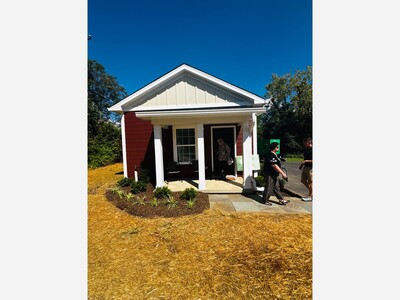
That question deserves attention while the development is still waiting for site plan approval. In a November 21 interview for The Spotsylvania Gazette, Micah Ecumenical Ministries executive director Meghann Cotter outlined plans for a first phase of 50 homes, each about 522 square feet, on 31 acres near Fall Hill Avenue. The proposal also includes a community center with case management, health care, employment and income support, and opportunities for residents to build relationships. Cotter hopes the first people can be housed by Christmas 2027, while acknowledging that the date could slip into early 2028.
This is a serious and unusually concrete approach to chronic homelessness. The Gazette reported that Micah has raised about $14 million toward a first phase expected to cost $17.5 million, including seven years of operating expenses. Cotter said she had asked Spotsylvania and Stafford counties to consider contributions tied to housing people from their jurisdictions. Those requests and the remaining financial gap are real matters for public review, not decisions that should be described as settled.
The financial questions are legitimate. Residents may reasonably ask how a project is funded, who is eligible, what supports will be provided, and which public responsibilities it could relieve. They deserve straight answers. But evaluation should go beyond construction costs and the number of completed houses. The deeper public investment is in stability: a person has somewhere to sleep, someone to call when a problem develops, and a real opportunity to remain part of the community.
Before the first move-in, Micah and any government partners should agree on a simple public measure of how the supportive-housing model is performing. How many residents remain safely housed after six months and a year? How promptly can they reach a case manager? Are residents able to access the health and income services promised in the plan? When someone moves elsewhere, was the transition chosen and supported, or did another crisis push them out? The results should be shared in totals that protect personal privacy.
These measures are not a demand that residents prove themselves worthy of a home. They are a way to hold the organizations responsible for providing the promised support. A person rebuilding life after long homelessness should not carry the burden of explaining a system's shortcomings in public. Nor should a case manager be expected to succeed without enough time, staff or access to the services a resident needs.
The Gazette's account of the community's namesake shows why continuity matters. Jeremiah, a veteran and North Stafford High School graduate, lived outside for 27 years before Micah workers built a relationship with him, helped with his benefits, and kept inviting him toward housing. The offer took time. Respect and patient trust did what a one-day announcement could not. His story must not be reduced to a marketing line; its practical lesson is that the work of belonging rarely follows a neat construction schedule.
For neighbors who worry that a supportive-housing community will become isolated, the response should be ongoing transparency and real contact. Public information sessions can explain site planning and how the support model works without revealing residents' private histories. Local health providers, employers and volunteer groups can offer their skills through arrangements that are coordinated rather than improvised. The people who will live there should have a meaningful voice in what community actually means to them.
Jesus described the good Samaritan as someone who did more than stop for a wounded stranger. He arranged continuing care and made a commitment to return. That detail in Luke 10 speaks directly to this project. Compassion is tested by what happens after the first helpful gesture, when the crowd has left and the less visible work remains.
Jeremiah Community should be judged neither by a hopeful groundbreaking photograph nor by suspicion before anyone has moved in. A fair first step is a published agreement about services, safeguards, costs and housing stability, reviewed with residents' dignity intact. Fifty doors can open. The lasting achievement will be fifty opportunities to keep a home and build a life beyond it.
Douglas Vandergraph
https://douglasvandergraph.com/
Editor's note:
This commentary was sent November 25, 2026. The Jeremiah Community site plan was approved November 23, 2026. The Gazette's interview with Meghann Cotter was November 20, 2026, published November 21.
The views in this commentary are the author's, not the Spotsylvania Gazette's.
More News from Spotsylvania Courthouse
- JEREMIAH COMMUNITY SITE PLAN APPROVED; CONSTRUCTION TO BEGIN IN A FEW WEEKS JEREMIAH COMMUNITY SITE PLAN APPROVED; CONSTRUCTION TO BEGIN IN A FEW WEEKS
- KALAHARI'S 'COLOSSAL WAVE OF WONDER' FLOAT RETURNS TO MACY'S PARADE KALAHARI'S 'COLOSSAL WAVE OF WONDER' FLOAT RETURNS TO MACY'S PARADE