59° and Clear



Image
By The Spotsylvania Gazette
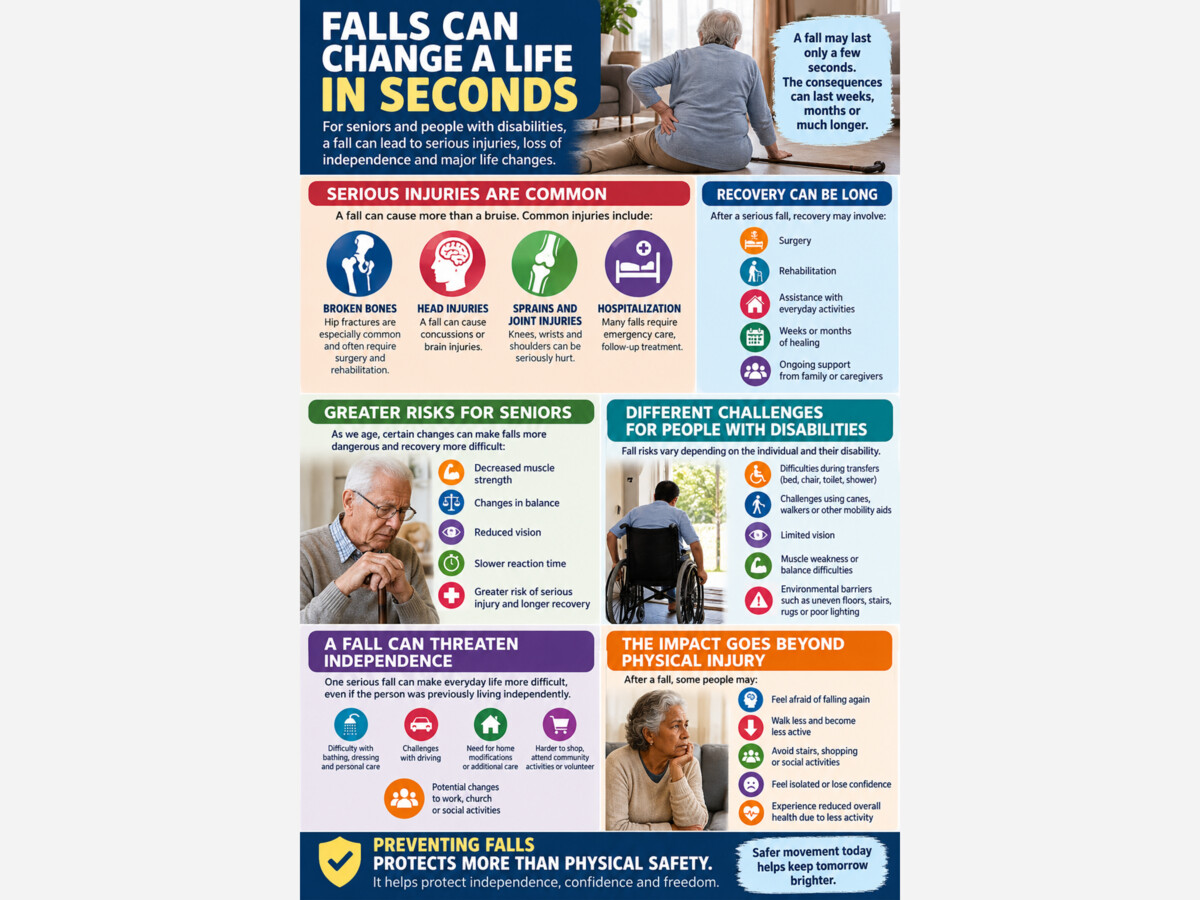
A fall may last only a few seconds. The consequences can last weeks, months or much longer.
For seniors and people with disabilities, a fall can mean more than a bruise or a few days of soreness. It can lead to broken bones, head injuries, hospitalization, rehabilitation and a sudden loss of independence.
That is why fall prevention matters.
Seniors Face Greater Risks
As people grow older, changes in strength, balance, vision and reaction time can make recovering from a stumble more difficult.
A fall that might cause a minor injury in a younger person can have much more serious consequences for an older adult.
Hip fractures are among the injuries of greatest concern. Recovery can require surgery, rehabilitation and assistance with everyday activities.
Head injuries also deserve attention, particularly when a person strikes their head during a fall.
But the effects are not always physical.
After experiencing a fall, some seniors become afraid of falling again. That fear may cause them to walk less, avoid stairs, stop shopping independently or withdraw from activities they previously enjoyed.
Less activity can then contribute to reduced strength and balance, creating another risk.
People With Disabilities May Face Different Challenges
People with disabilities are not one group, and fall risks differ greatly from person to person.
Someone who uses a cane or walker may encounter problems when a walkway is blocked or uneven. A wheelchair user may face risks during transfers between a wheelchair, bed, toilet or shower.
People with limited vision may have difficulty identifying steps, changes in floor height or obstacles. Others may experience muscle weakness, balance difficulties or problems safely navigating spaces that were never designed with accessibility in mind.
That is an important distinction: sometimes the danger is not simply the person’s disability.
The environment itself can create the hazard.
A poorly placed rug, inaccessible bathroom, badly lit staircase, uneven sidewalk or crowded room can turn an ordinary movement into a dangerous one.
A Fall Can Threaten Independence
For many seniors and people with disabilities, independence has been built carefully around routines, mobility equipment, transportation and accessible surroundings.
One serious fall can disrupt all of that.
A person who was living independently may temporarily need help bathing, dressing, preparing meals or getting around the house. Driving may become difficult. Returning to work, volunteering, church, shopping or community activities may take time.
Families can also suddenly find themselves arranging transportation, medical appointments, home modifications or additional care.
That is why preventing falls is about much more than avoiding injury.
It is about protecting independence.
Do Not Ignore a Fall
Not every fall results in a serious injury, but repeated falls, unexplained stumbles or noticeable changes in balance should not simply become part of everyday life.
They are worth discussing with a health care provider.
Mobility equipment should also fit the individual properly and be used as intended. Physical and occupational therapists can help people evaluate movement, transfers and the way a home or workplace is set up.
For seniors and people with disabilities, the goal should not be to discourage movement or independence.
It should be to make movement safer.
A few changes in the environment, the right equipment and attention to warning signs can help people continue doing the things that matter to them.
Preventing falls helps protect more than physical safety. It helps protect freedom, confidence and independence.


Sunny, with a high of 76 and low of 53 degrees. Sunny in the morning, clear in the afternoon and evening,