69° and Overcast
Image
Public Agenda



by Dr Shellie M. Bowman Sr
Editor, Public Agenda/Senior Columnist, The Spotsylvania Gazette
Introduction: Why House District 66 Matters
House District 66 occupies a distinctive position within the Commonwealth of Virginia. Comprising portions of Spotsylvania County and Caroline County, the district reflects the demographic, economic, and political tensions increasingly characteristic of outer-suburban and semi-rural jurisdictions across the United States. It is neither solidly urban nor traditionally rural, neither reliably partisan nor electorally dormant. Instead, it represents a space where public expectations of government are evolving more rapidly than institutional norms often allow.
The 2025 election of Nicole Cole must therefore be understood not merely as a change in officeholder but as an indicator of democratic recalibration within a district that had been represented by the same delegate for more than three decades.
 Public Agenda
 This article examines that transition through a case-based analysis grounded in observational data from Cole’s swearing-in ceremony, publicly verifiable election results, and institutional records of legislative authority.
The argument advanced here is that House District 66 offers a rare, instructive case of how democratic legitimacy is renegotiated when long-standing incumbency gives way to competitive renewal, and how that legitimacy must then be sustained through governance rather than electoral success alone.
Methodological Approach and Data Integrity
This study employs qualitative case analysis informed by three data sources: author-owned observational photographs taken during the public swearing-in ceremony inside the Virginia House of Delegates chamber; official electoral data and committee assignments published by the Commonwealth of Virginia; and contemporaneous local reporting documenting the 2025 House District 66 election.
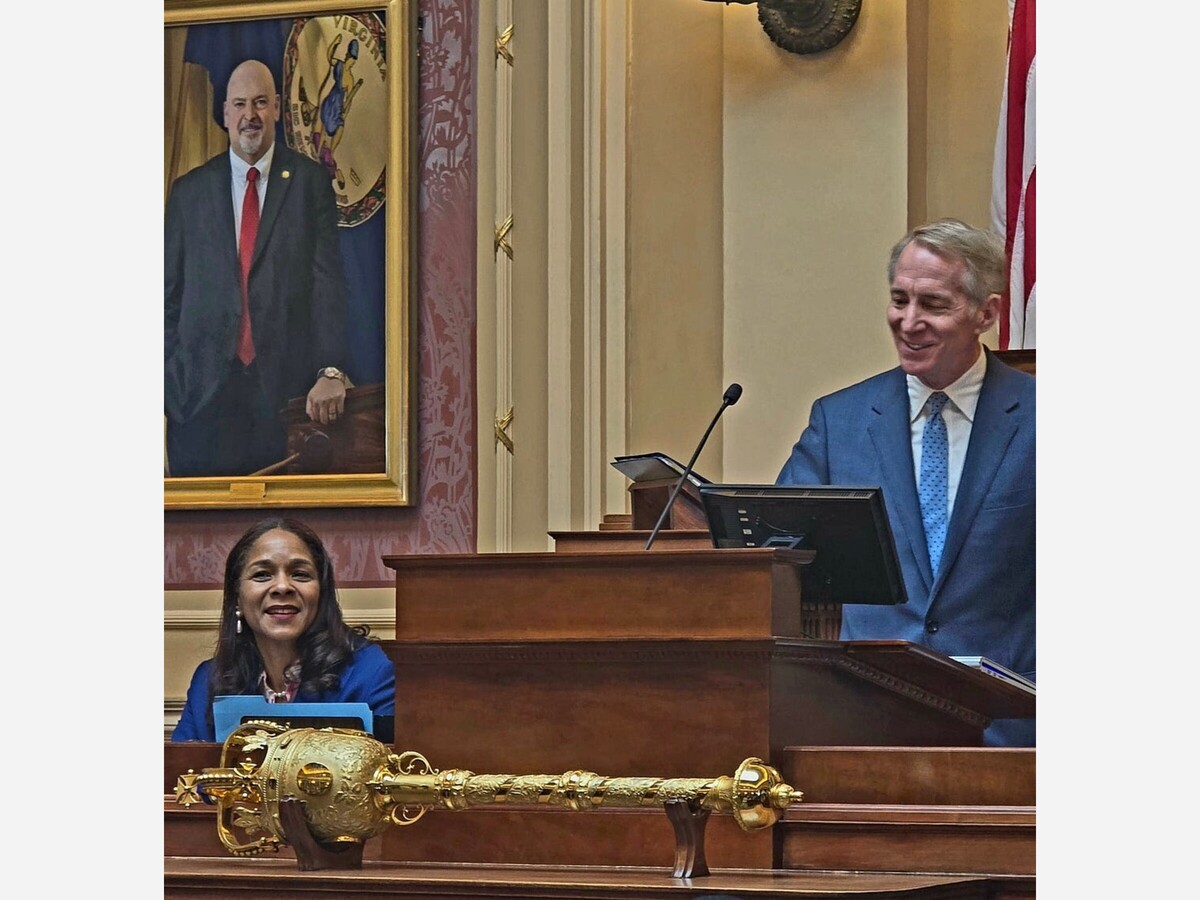
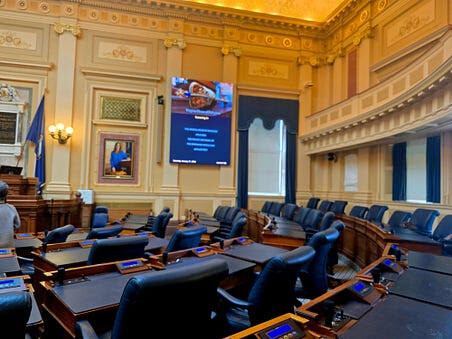
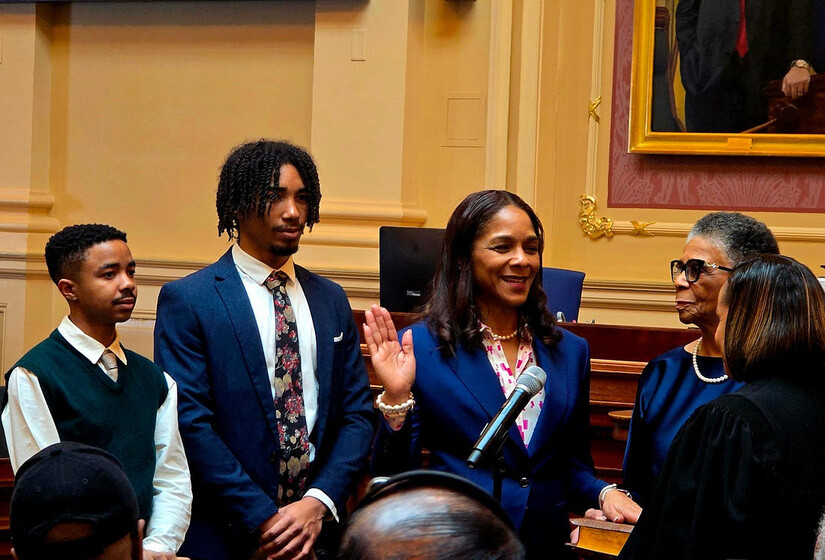
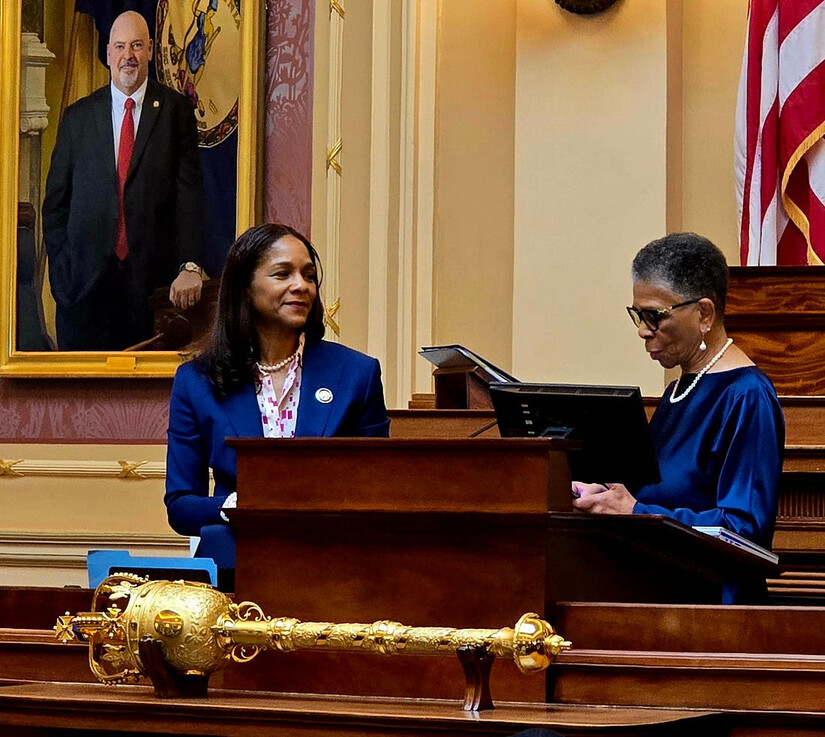
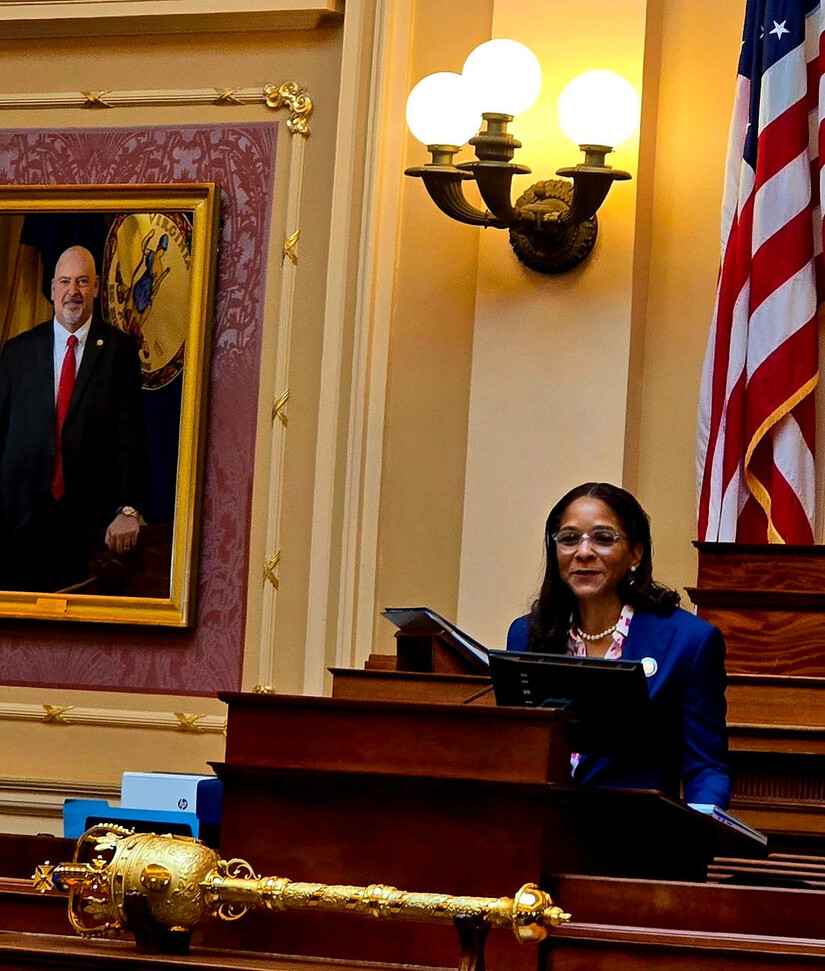
The photographs referenced in this analysis function as visual observational data analogous to field notes in institutional ethnography. They document the physical setting of legislative authority, the procedural act of oath administration, and the presence of family, judiciary, and institutional actors during the transfer of power. No images are altered, staged, or editorialized beyond analytical interpretation grounded in theory.
House District 66 as a Governance Environment
To understand the significance of Cole’s election, it is necessary to situate House District 66 as a governance environment rather than a campaign battlefield. Spotsylvania County has experienced sustained population growth, increasing housing development, and mounting pressure on public infrastructure, education systems, and health services. Caroline County, while smaller and more rural, faces parallel challenges related to service access, economic development, and state-local coordination.
 Public Agenda
 These conditions shape constituent expectations in concrete ways. Residents of HD66 are increasingly attentive to how state-level decisions affect local service delivery, taxation, school funding, transportation, and land use authority. Public administration scholarship emphasizes that such districts often serve as early indicators of shifting public value priorities, particularly when growth outpaces governance capacity (Moore, 1995; Bryson et al., 2014).
Electoral Transition as Democratic Signal
The 2025 general election resulted in Nicole Cole receiving approximately 52 percent of the vote, defeating a 35-year incumbent who had come to symbolize institutional continuity for many constituents. From an analytical standpoint, this margin is significant. It reflects not a landslide rejection of prior governance, but a measured reorientation of representation.
Competitive elections in previously stable districts are widely understood in the literature as signals of recalibrated accountability rather than ideological realignment (Fenno, 1978; Pitkin, 1967). In this context, Cole’s victory suggests that HD66 constituents were seeking renewed responsiveness, visibility, and engagement within the constraints of state legislative governance.
The Swearing-In as Institutional Inflection Point
The author’s observational data from the Virginia House of Delegates chamber captures the precise moment when electoral consent is converted into constitutional authority. The oath of office, administered in open view of the chamber, judiciary, and public, binds the delegate to the Constitutions of the United States and Virginia rather than to campaign commitments or partisan allegiance.
 Public Agenda
 What distinguishes this ceremony in HD66’s context is not its form, but its timing. After decades of representational continuity, the ritual functions as a public reset. The chamber itself, with its unoccupied desks awaiting legislative use and its visual reminders of prior leadership, reinforces the principle that authority is institutional, temporary, and accountable.
Public administration theory has long recognized such rituals as stabilizing mechanisms that legitimize change without destabilizing governance (March & Olsen, 1989; Goodsell, 2011). In HD66’s case, the ceremony marks the district’s formal entry into a new governance phase.
Governing Capacity and Committee Alignment
Cole’s initial committee assignments provide tangible insight into the future governance trajectory of House District 66. Appointment to the House Finance Committee positions the district within the central arena of fiscal decision-making, where state budgets, revenue structures, and appropriations directly affect local capacity. Service on the Committees on Counties, Cities and Towns, and on Health and Human Services further aligns with district-specific needs related to local authority, service coordination, and population health.
Legislative organization research demonstrates that early committee placement significantly shapes a delegate’s ability to convert constituent priorities into policy influence (Krehbiel, 1991). For HD66, this alignment represents more than prestige. It establishes institutional pathways through which district concerns can be articulated and negotiated at the state level.
 Public Agenda
 Implications for the Future State of HD66
The future state of House District 66 will not be determined by campaign narratives or symbolic milestones alone. It will be shaped by measurable governance practices: the transparency of constituent communication, the consistency of district engagement, the translation of committee work into local impact, and adherence to the constitutional oath that inaugurated service.
From a scholarly perspective, HD66 now functions as a living case study in democratic renewal under conditions of competitive accountability. For constituents, the transition invites a recalibrated relationship with representation that emphasizes monitoring, participation, and informed expectation rather than passive trust.
Conclusion: A Moment Worth Preserving
 Public Agenda
 The swearing-in of Nicole Cole is notable not because it conforms to tradition, but because it reactivates it in the service of democratic renewal. For House District 66, the ceremony documented here represents a moment when history, institutional design, and constituent aspiration intersect.
Years from now, this moment may be remembered not for the outcome of a single election, but for how a district chose to reassert its role within representative governance. The images preserved by the author ensure that this transition remains part of the civic and scholarly record, available for reflection, instruction, and accountability.
References
Bryson, J. M., Crosby, B. C., & Bloomberg, L. (2014). Public value governance. Public Administration Review, 74(4), 445–456.
Fenno, R. F. (1978). Home style: House members in their districts. Little, Brown.
Goodsell, C. T. (2011). Mission mystique: Belief systems in public agencies. CQ Press.
Krehbiel, K. (1991). Information and legislative organization. University of Michigan Press.
March, J. G., & Olsen, J. P. (1989). Rediscovering institutions: The organizational basis of politics. Free Press.
Moore, M. H. (1995). Creating public value: Strategic management in government. Harvard University Press.
Pitkin, H. F. (1967). The concept of representation. University of California Press.
Virginia House of Delegates. (2026). Member profile: Nicole Cole, District 66.
https://house.virginia.gov
Fredericksburg Free Press. (2025). Election results and district analysis: House District 66.
In order to access all of Dr Shellie’s articles with Public Agenda on Substack click on https://substack.com/@drshellie/note/p-186687928?r=va8ka&utm_medium=ios…
Stay Connected with Public Agenda by Dr. Shellie M. Bowman
Let’s rebuild public leadership together; one insight, one question, one breakthrough at a time.
eLEADt On with Purpose.
 Public Agenda


Sunny, with a high of 82 and low of 58 degrees. Sunny in the morning, overcast during the afternoon and evening, clear overnight.