


Image
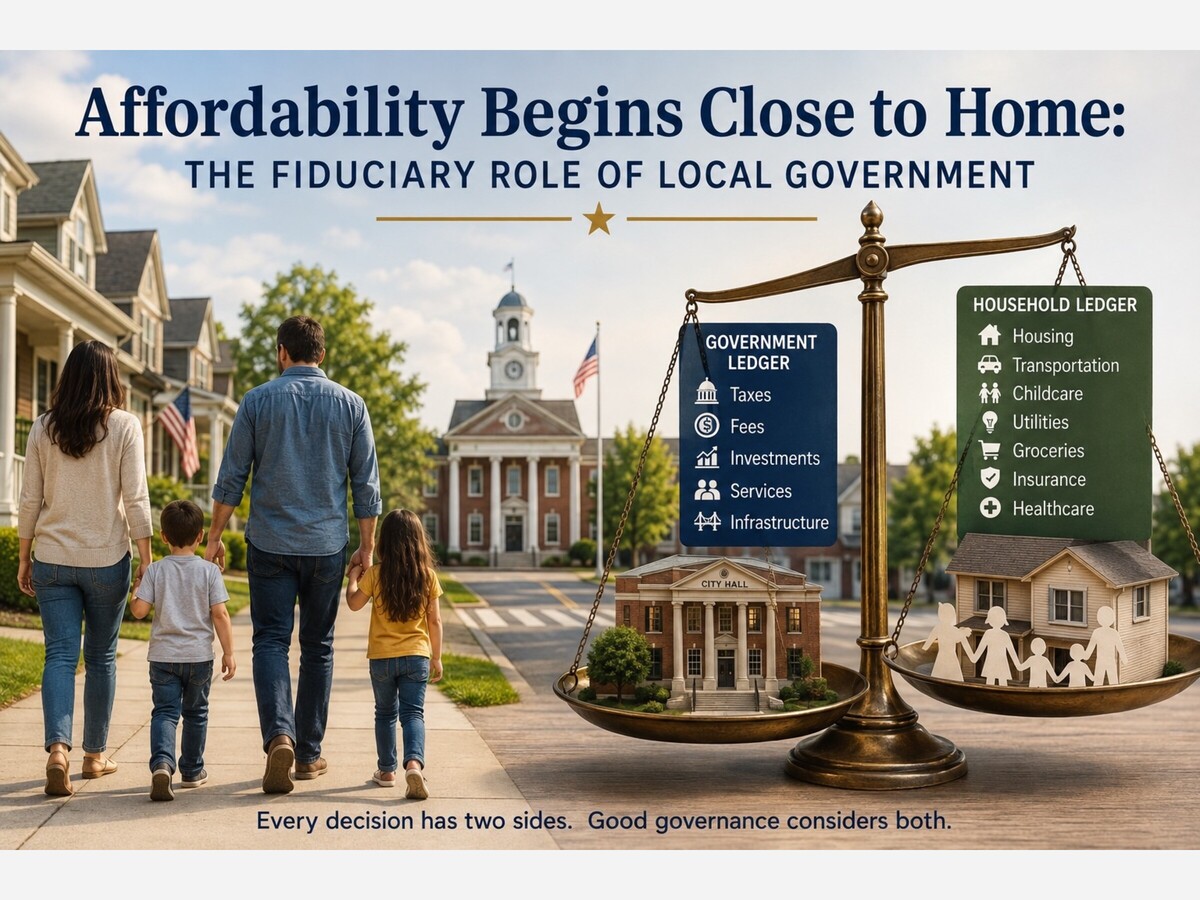
By Dr Shellie M Bowman
For many American families, affordability is not an abstract economic indicator. It is the calculation that happens at the kitchen table.
The mortgage or rent is paid. Then comes transportation, food, utilities, insurance, childcare, taxes, and everything else required to maintain a household. What remains determines whether a family can save, absorb an emergency, prepare for retirement, help a child attend college, or simply make it comfortably to the next paycheck.
The numbers help explain why affordability has become such a persistent public concern. In 2024, American households spent an average of $78,535. Housing alone represented 33.4 percent of average household expenditures, while transportation accounted for another 17 percent. Together, those two necessities consumed slightly more than half of average household spending (U.S. Bureau of Labor Statistics [BLS], 2026).
Housing pressures are particularly revealing. More than 21 million renter households spent over 30 percent of their income on housing costs in 2023, meeting the commonly used definition of being housing-cost burdened. Importantly, affordability pressures are not confined to renters. The U.S. Census Bureau also reported that 18.8 million homeowners were spending more than 30 percent of their income on housing costs (U.S. Census Bureau, 2024).
These are national figures, but affordability is ultimately lived locally.
That creates an important question for public administrators and elected officials: What responsibility does local government have for family affordability?
The answer requires some restraint.
County councils, city councils, boards of supervisors, mayors, and other local officials do not control national inflation. They do not establish mortgage interest rates. They cannot dictate grocery prices or determine the cost of automobile insurance.
Holding local government responsible for economic forces beyond its authority would be neither reasonable nor productive.
Yet the opposite conclusion would also be mistaken.
Local governments make decisions about property taxation, fees, land use, zoning, permitting, transportation infrastructure, economic development, public services, and capital investment. Individually, each decision may appear to occupy its own policy category. Families do not experience them that way.
They experience a household budget. They experience bills, and sometimes, without enough resources.
That distinction matters.
A transportation decision may affect how far someone must drive to work. A land-use decision can influence what kinds of housing may be built and where. Development decisions can affect both the tax base and future infrastructure requirements. Property-tax decisions affect the cost of owning property. Fees imposed for government services eventually become expenses somebody must pay.
None of these decisions independently determines whether a community is affordable. Collectively, however, they can influence the cost of living there.
That is where affordability becomes a matter of governance.
The U.S. Census Bureau’s household surveys offer an instructive example of how affordability can be understood. Rather than treating household well-being as a single economic measure, the Bureau examines difficulty paying usual household expenses alongside housing security, energy spending, transportation access, food sufficiency, and changes in prices (U.S. Census Bureau, 2026).
There is wisdom in that approach.
Families experience financial pressure cumulatively.
A household may be able to absorb an increase in one expense. It becomes more difficult when housing, transportation, insurance, utilities, taxes, and other necessities increase together. A policy that appears modest when considered independently may feel very different when added to everything the household is already carrying.
This does not mean every government decision should be made according to whether someone must pay for it. Government exists to provide public goods and services, and quality public services require resources.
The fiduciary question is different.
Has government adequately considered the burden it is asking the public to carry and the public value received in return?
That question should be part of serious fiscal governance.
There is a temptation to reduce discussions of local affordability to a familiar prescription: lower taxes.
Sometimes tax relief may be appropriate. But affordability is more complicated than the tax rate alone.
Consider housing.
Local governments exercise substantial authority over land-use and development decisions. Zoning rules, permitting processes, density restrictions, infrastructure requirements, and development timelines can affect what housing is economically feasible to construct. For that reason, federal housing policy increasingly recognizes local regulatory reform as one component of addressing housing supply and affordability.
The lesson is not that every locality should approve every development proposal. Growth creates legitimate questions about infrastructure, schools, transportation, environmental protection, public safety, and community character.
Rather, it illustrates the need to examine consequences across the entire system.
The same principle applies to taxation.
Reducing one tax while shifting the cost of government onto another tax, fee, or narrow group of taxpayers may change the appearance of the burden without meaningfully improving affordability. Likewise, refusing a prudent public investment simply because it costs money can be shortsighted if that investment reduces higher costs over time.
Fiscal stewardship therefore requires more than asking whether government is spending less.
It requires asking whether public resources and public burdens are being managed wisely.
Fiduciary thinking begins with stewardship.
In private financial affairs, a fiduciary is expected to exercise care and place the interests entrusted to that person at the center of decision-making. Government is not an investment adviser, and public officials operate under different legal duties. Still, the underlying principle of stewardship offers something valuable to public administration.
Public resources are entrusted resources.
The taxes and fees collected by government originated somewhere. Ultimately, much of that revenue traces back to households, workers, property owners, consumers, and businesses operating within the community.
Responsible government must therefore consider more than whether sufficient revenue can be raised. It should also consider how that revenue is raised, who ultimately bears the burden, whether alternatives exist, and whether the resulting public value justifies the cost.
That does not guarantee that every family will agree with every decision. Nor does it eliminate difficult choices.
It creates something more fundamental: a discipline for making those choices.
Before imposing a new cost, ask who will bear it.
Before granting tax relief, ask who will finance the difference.
Before restricting development, understand the potential effect on housing supply.
Before approving development, understand its long-term infrastructure obligations.
Before making a capital investment, consider both its governmental cost and its potential value to the people who will finance and use it.
These are not ideological questions. They are stewardship questions.
The national affordability conversation will continue to focus appropriately on inflation, interest rates, wages, housing markets, healthcare, and other major economic forces.
But another conversation belongs much closer to home.
Local governments cannot promise to make life affordable. They should not pretend that they can.
What they can do is ensure that their own decisions do not unnecessarily make affordability more difficult. They can examine household consequences alongside governmental revenue. They can search for alternatives before transferring additional costs to residents. They can evaluate public investments according to long-term value rather than immediate price alone. And they can recognize that fiscal decisions ultimately reach beyond government accounting systems and into household budgets.
For families, affordability is rarely determined by one expense.
For government, stewardship should therefore never be determined by one line on a budget.
The responsibility is to understand the whole picture, exercise care with the resources entrusted by the public, and remember that behind every revenue projection, tax rate, fee, and expenditure are people trying to build sustainable lives in the communities they call home.
That may be one of the most practical ways local government can contribute to family affordability.
U.S. Bureau of Labor Statistics. (2026, February 12). Housing and transportation accounted for 50 percent of household spending in 2024. U.S. Department of Labor.
U.S. Census Bureau. (2024, September 12). Nearly half of renter households are cost-burdened, proportions differ by race. U.S. Department of Commerce.
U.S. Census Bureau. (2026, April 23). New data released from Household Trends and Outlook Pulse Survey. U.S. Department of Commerce.
By Dr. Shellie M. Bowman · Launched a year ago Public Agenda is a trusted voice at the intersection of democracy, leadership, and public trust, bringing clarity, courage, and conviction to the challenges that shape our common good.



Sunny, with a high of 73 and low of 50 degrees. Sunny during the morning, cloudy in the afternoon and evening, overcast overnight.